'Mysterious Cave Pearls Unveil Ancient Artifacts in Stunning Discovery'
Scientists have discovered a distinctive assembly of "cave pearls"—which include some archaeological items—within an old passageway, as outlined in a recent study.
Cave pearls fall under the category of "speleothems," which is a term used for different mineral deposits found within caves, such as stalactites and stalagmites.
Cave pearls are generally spherical and usually range from very tiny, about 0.1 millimeters, up to quite large, around 30 centimeters or roughly 12 inches in diameter.
Often discovered in small bodies of water rich in calcite minerals, these formations typically separate from the cave’s floor, walls, or ceiling. This characteristic sets them apart from most types of speleothems.
In the most recent research, featured in the journal Archaeometry A group of scientists have reported finding 50 cave pearls within an old tunnel situated in the Jerusalem Hills region of Israel.
Cave pearls have been discovered on multiple continents before, but they remain "extremely uncommon" in the Southern Levant area, according to the researchers. They noted further that this newly unearthed collection represents both the biggest and the most abundant find of cave pearls recorded in that part of the world so far.
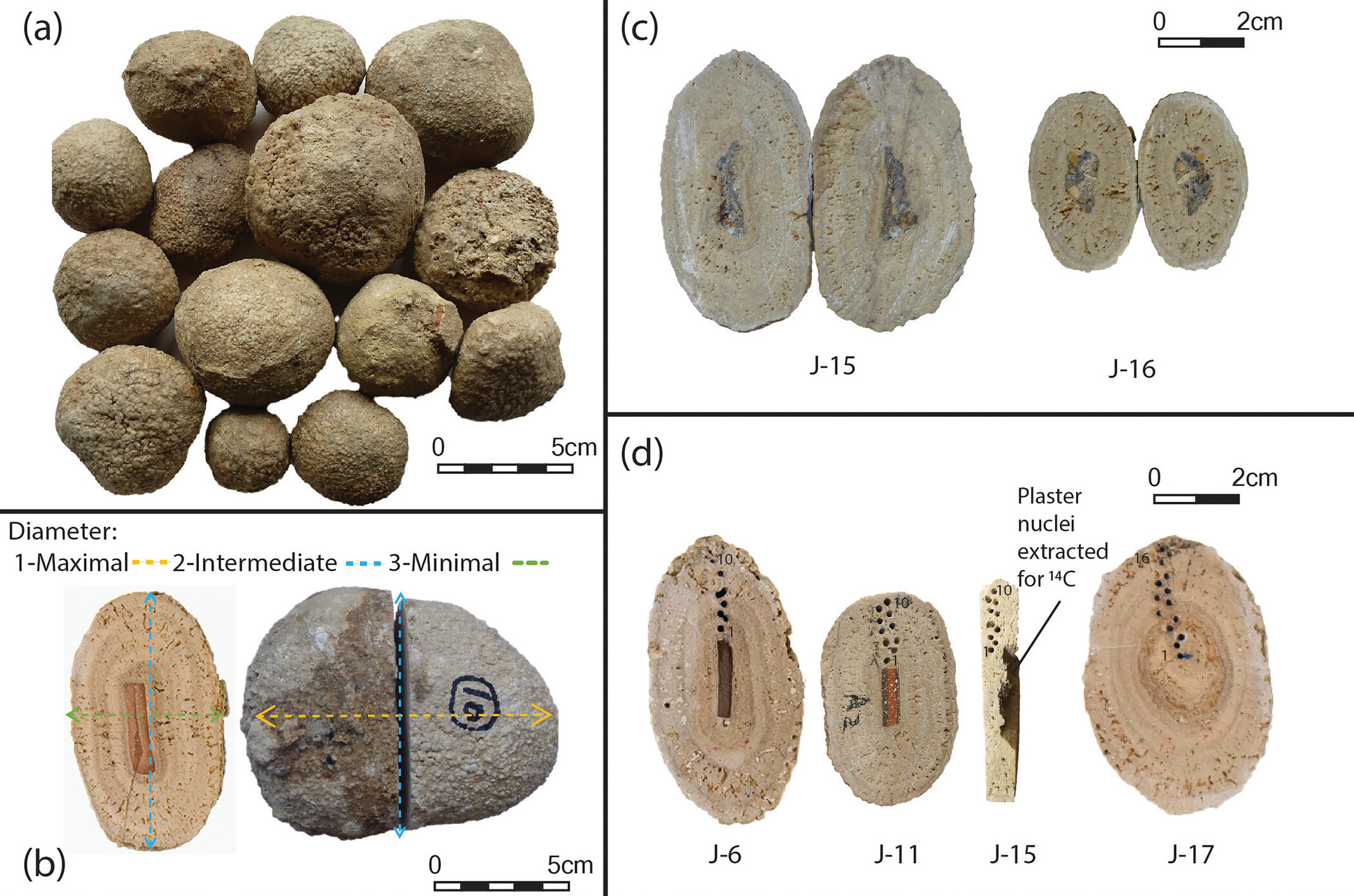
Cave pearls develop with a core that may consist of various substances like pebbles, clay chunks, sections of wood, remains of blue-green algae, and bone bits.
However, some instances within the newly found collection seem to have developed around ancient relics, marking the first occurrence where experts have observed this kind of event.
Unlike many other types of stalactites and stalagmites, cave pearls typically have much younger ages, usually just a few hundred years old, because they grow at an accelerated pace.
The study authors noted in their paper that until now, cave pearls have not been discovered in an archaeological setting or utilized for such investigations.
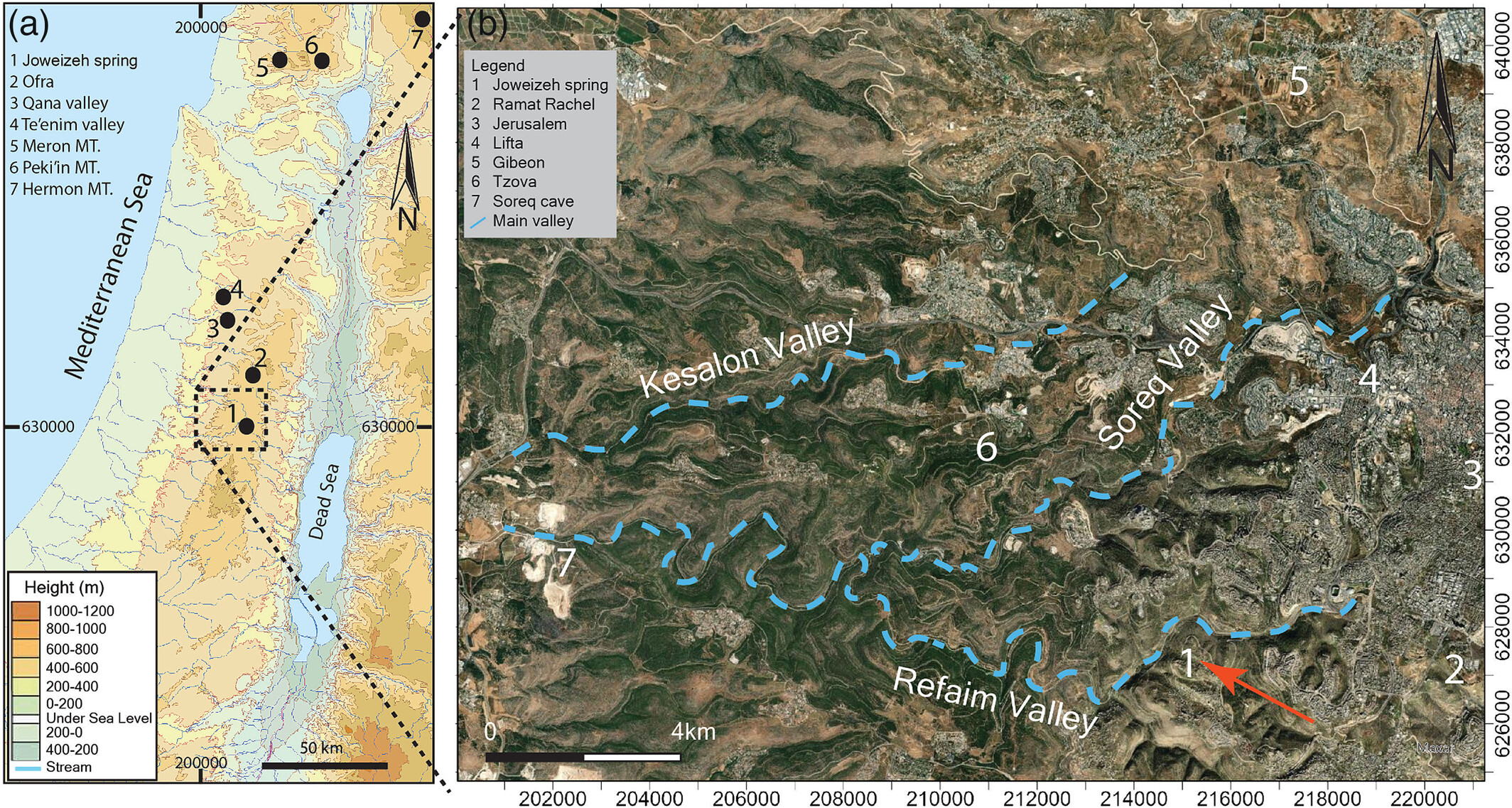
While exploring the Joweizeh spring tunnel in the Jerusalem Hills, the research team unexpectedly discovered a collection of 50 cave pearls. Spring tunnels were engineered structures created in antiquity to access water trapped within perched aquifers—layers of porous rock beneath the surface that hold groundwater.
Over 210 spring tunnels have been identified in the mountainous regions of the Southern Levant, possibly making this area the most densely populated with such structures globally.
The Joweizeh spring tunnel stands as one of the longest and oldest discovered to date in the Southern Levant. This tunnel consists of two primary sections with a total span exceeding 760 feet.
Earlier findings suggested that the beginnings of the structure trace back to the 8th-to early 7th centuries B.C., placing it within the late Iron Age II phase in this area. This era generally encompasses the timespan from the 10th century B.C. down to the start of the 6th century B.C. It’s believed that the tunnel might have been built as part of what could be described as a royal residence.
The researchers were not searching for cave pearls. However, during their investigation in Joweizeh in 2017, they discovered signs of ancient plundering along with an entrance to a formerly closed-off section branching off the primary tunnel toward the south. This recently exposed part measures approximately 23 feet in length and is obstructed by dirt and rubble.
This particular section and its accompanying debris contained both the collection of cave pearls along with an undamaged oil lamp, which probably dates back to between the 3rd and 4th centuries AD.
The scientists then performed examinations of the cave pearls to gain insights into their structure, makeup, and timeline. Their investigations revealed that out of the 50 samples, 14 were built up around shards of pottery—with two seemingly coming from clay lamps—whereas the cores of another pair comprised pieces of old stucco.
The charcoal taken from the cores of two cave pearls was found to be approximately contemporaneous with the Hellenistic era (333–63 BC). The analysis of the ceramic material from within these cores indicated that much of this pottery likely dates back to either the Hellenistic age or extends into the subsequent eras of late Roman through Byzantine times, covering the timeframe from 63 BC up to the initial Muslim invasions in the first half of the 7th century AD.
However, there were some exceptions, such as one shard (referred to as J-14), which seems linked to earlier dating extending back to times prior to the Hellenistic era, possibly reaching into the Persian period (535-333 BC) or the Babylonian period (586-535 BC)—or maybe even further back to the Iron Age.
According to the researchers, recent findings indicate several phases of tunnel use and cave pearl creation. The investigation offers proof that a renovation project occurred within the tunnel during the Hellenistic era, likely undertaken using lamp illumination.
The pottery shards and additional discoveries detailed in the study suggest that the tunnel was utilized from the Hellenistic through the Byzantine eras. However, the investigation also reveals insights into where the materials for building came from.
"The findings from our investigation reinforce the belief that the tunnel was initially built during the Iron Age, approximately between the 8th and 7th centuries B.C., " stated study leader Azriel Yechezkel from the Institute of Archaeology at Tel Aviv University. kor.news Additionally, this offers the initial analytical dating of artifacts discovered within the pearls, indicating that the tunnel underwent a reconstruction phase during the Hellenistic period.
Do you have a suggestion for a science story? kor.news Should it include coverage of archaeology? If you have a query about archaeology, feel free to reach out at science@kor.news.
Updated on December 12, 2024, at 11:14 AM ET: The piece has been revised to include further details and comments from Azriel Yechezkel.
Reference
Yechezkel, A., Vaknin, Y., Cooper-Frumken, S., Ryb, U., Shaar, R., Gadot, Y., & Frumkin, A. (2024). Determining the age of an ancient spring tunnel through archaeological artifacts acting as cores for cave pearls. Archaeometry . https://doi.org/10.1111/arcm.13031
Related Articles
- Old Pyramid Found During Road Construction in Mexico
- Missing Enigmatic Old Tongue Unearthed on Stone in Georgia
- Mysteries of 2,700-Year-Old Deserted City Unveiled Through Recent Find
Start your unlimited kor.newstrial


Comments
Post a Comment